Interview: Pinqy Ring Talks Chicago, Hip Hop, Diplomacy and more.
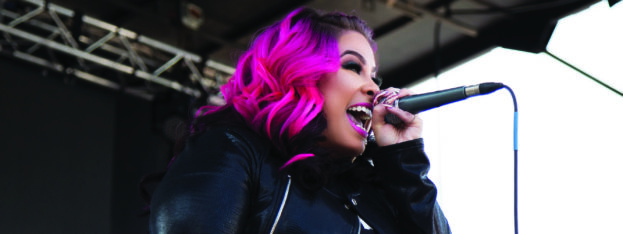
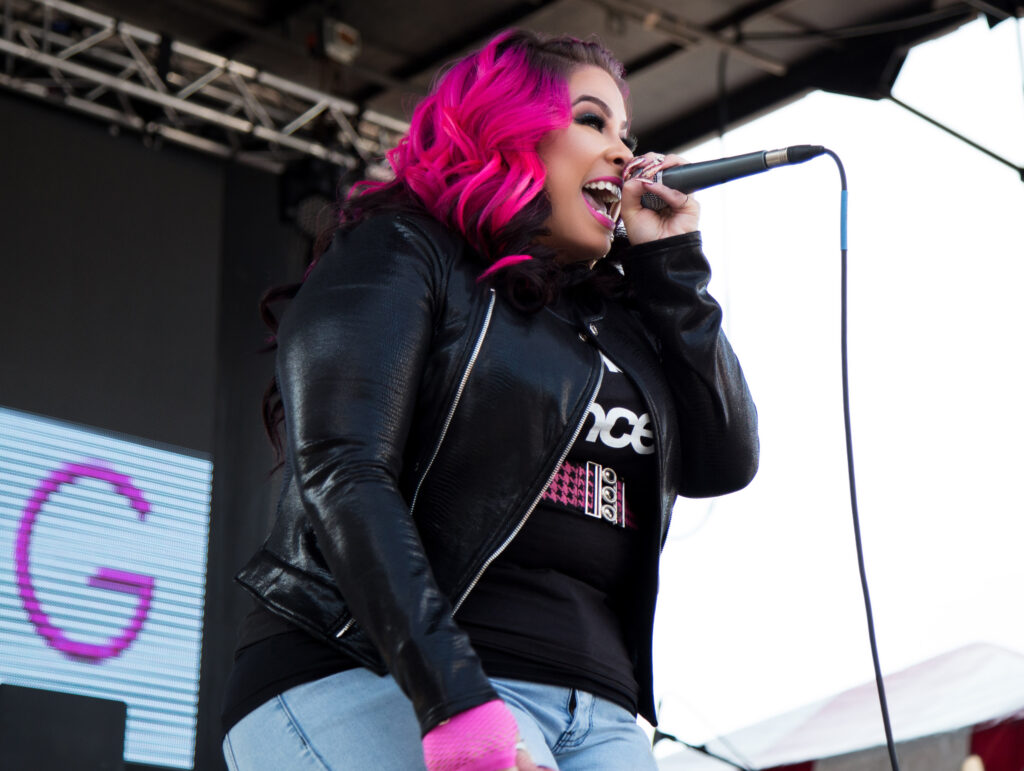
Marisol ‘Pinqy Ring’ Vélez has been doing her thing in Chicago’s hip hop scene for years now. She’s more than just an MC though. Pinqy is an activist, storyteller, writer, educator, and through and through representative of Hip Hop. Our Get Em High family BROTH3R caught up with Pinqy prior to her performance at the inaugural Ground Waves Festival in Chicago this summer to learn more about Pinqy and her movement. Check out the interview below, and look out for Pinqy Ring’s latest song, “Ave Maria,” out now!
BROTH3R: Who is Pinqy Ring?
Pinqy Ring: Pinqy Ring is a rapper, educator, cultural worker, healer, mentor, and professional troublemaker, in the best possible way. She is hella Chicago and extremely Puerto Rican. And, at her core, she is Hip Hop.
I’ve spent almost half my life using this culture to tell stories, build community, challenge systems, and create spaces where people feel seen and heard. Whether I’m onstage performing, in a classroom working with educators, somewhere across the world doing cultural diplomacy, or sitting in a cypher talking about healing, the throughline is really the same: I believe our stories have power. I’m interested in what happens when people, especially people whose voices have historically been pushed to the margins, recognize that power, use it, and then make a little trouble with it.
BROTH3R: Before the music, who were you? What was it like growing up in Chicago, and how did the city shape you?
Pinqy: I feel like I was always a troublemaker and rabble-rouser. They used to call me fosforito when I was a little girl, which means “little matchstick,” because I was a fire. Even though I came from a culture that often encouraged girls to play small and be quiet, and I was raised in a religion that restricted a lot of my self-actualization, there was always something in me that questioned everything. I had empathy for everybody, I wanted to understand why things were the way they were, and I was never very good at accepting “because that’s just how it is” as an answer.
Then I found Hip Hop, and it opened my world to endless possibilities. It gave that little fire somewhere to go. I became a teenager who was fearless, confident, curious, and increasingly unafraid to challenge what I had been taught. That teenager became a woman who realized that questioning systems, taking up space, speaking truth, and making a little trouble could actually be part of my purpose.
Growing up in Chicago was both beautiful and challenging. This city will teach you about community, culture, creativity, segregation, inequity, joy, loss survival, and resilience, sometimes all on the same block. I grew up surrounded by so many different people and cultures, while also seeing firsthand the invisible lines that divide us. Chicago taught me how to be resilient, resourceful, loud, loving, and deeply committed to community. So much of the artist, educator, organizer, and troublemaker I am today was forged right here.
BROTH3R: I grew up on the East Coast, New York specifically, so Puerto Rican culture was all around me. What was the Puerto Rican community in Chicago like for you growing up? Where did you find that sense of culture and belonging?
Interestingly enough, I think there can be a certain pain point for parents who come from the island, where migration, survival, and assimilation can sometimes create distance from parts of the history and memory they left behind. In my family, there were pieces of that connection that just weren’t passed down to us. So growing up, my connection to Puertorriqueñidad came through language, food, family, and this immense sense of pride, but I didn’t necessarily have the historical or political context to understand where that pride came from.
But there is this swelling pride that comes with being Puerto Rican that, for me, feels like it lives in your DNA. It’s ancestral. I remember my brother and me drawing Puerto Rican flags on pieces of paper and putting them in the windows of our minivan while we drove through Humboldt Park during the Puerto Rican Parade. We didn’t know all of our history yet. We didn’t have the language for colonization, resistance, or even why that flag carried so much weight. We just knew: this is ours. This is who we are.
It wasn’t until I got to UIC and took a History of Puerto Rico class with Professor José López that so many of those missing pieces started coming together for me. I learned about Puerto Rico’s colonial history and things like La Ley de la Mordaza, the Gag Law, which criminalized expressions of Puerto Rican nationalist identity, including displaying the Puerto Rican flag in certain circumstances. That blew my mind. Here I was thinking about those little flags my brother and I proudly drew and put in our minivan windows, and now I was learning there had been a time when Puerto Ricans could be punished for displaying that same flag.
That class gave historical and political context to something I had always felt instinctively. It connected my pride to a much longer history of colonization, resistance, and survival. I really believe that class helped make me the revolutionary I am today.
And as I got older, Humboldt Park became a home for my Puerto Rican identity. I didn’t grow up there, but so much of my understanding of Puertorriqueñidad was nurtured there. I went from being that little kid riding through the neighborhood during the Puerto Rican Parade with handmade flags in our minivan windows, to finding community in spaces like Batey Urbano, performing at the parade as an artist, and, after graduating from UIC, eventually teaching at the Puerto Rican high school in the neighborhood.
There’s something really beautiful and full-circle about that for me. Humboldt Park became a place where the Puerto Rican pride I had always carried was given history, language, community, and context. I didn’t just learn more about where I came from. I found ways to participate in it, contribute to it, and eventually help pass that knowledge and pride on to another generation.
So my relationship to being Puerto Rican has really been one of reclamation. I inherited the pride before I inherited the history. And once I found the history, I started reclaiming all the pieces of myself that colonization, assimilation, migration, and time had made harder to access.
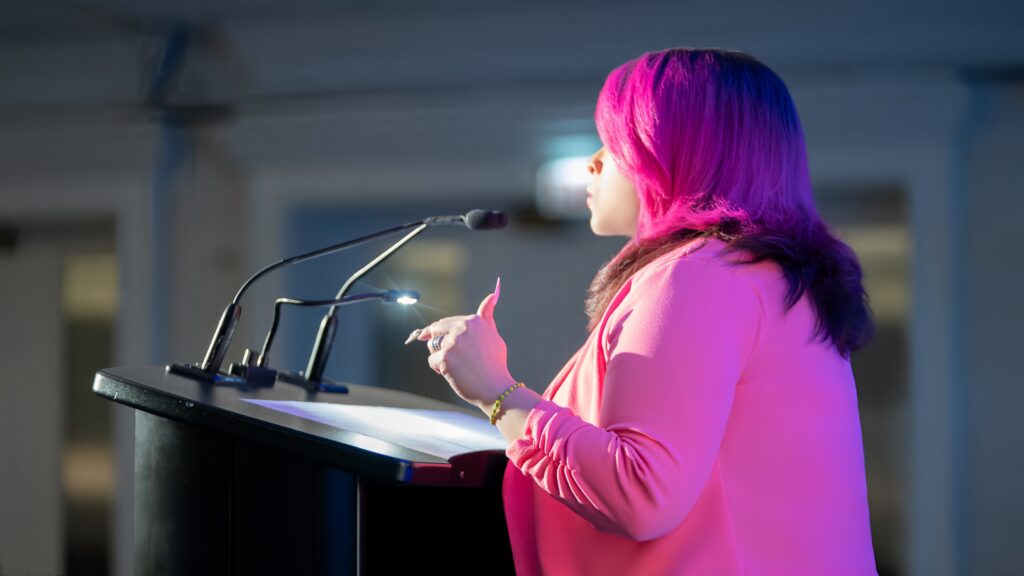
BROTH3R: “Pinqy” kind of sounds like a neighborhood nickname. Is the name derived from your neighborhood? Where did the name Pinqy Ring come from?
Pinqy: I always tell people there are two versions of this story: the hood story and the PR-friendly, sanitized story. But the hood story is way more interesting, so we’ll go with that.
I was a tomboy growing up and basically never wore pink. Then sophomore year of high school, I was dating a boy whose gang colors were black and pink and, well… my man, my man, my man. So suddenly, I was wearing pink.
I got a pair of pink pants airbrushed with G-Unit across the butt, inspired by a 50 Cent video. 50 was actually a HUGE influence on me during my formative years as an MC. I wore those pants to school, everybody started calling me Pinqy, and it just stuck.
So no, it wasn’t the neighborhood. It was teenage love, questionable fashion choices, gang colors, and 50 Cent. Which honestly feels like an extremely appropriate origin story for a rapper from Chicago.
BROTH3R: You’ve been blessed with opportunities that most MCs never get. Can you tell us more about your cultural ambassadorship through the U.S. State Department’s Hip Hop ambassador programs? How did that opportunity happen?
Pinqy: One of the wildest parts of my career has been getting to represent Hip Hop and Chicago around the world through cultural diplomacy. I’ve served as a U.S. Hip Hop Cultural Ambassador in five countries. FIVE.
It was actually something I applied for, and I got rejected the first year! But I didn’t give up. The opportunity just felt unreal to me and like the perfect intersection of so much of the work I was already doing: Hip Hop, education and connecting with people across cultures. So, I applied again.
The second time, I got in, and my first assignment sent me to Cambodia. I went into that experience ready to learn, work, and prove that I belonged there. Apparently I did something right, because that first trip eventually led to me becoming a site manager and being invited back to serve in four more countries: Morocco, Argentina, Costa Rica, and Nepal.
That trajectory means a lot to me because I literally went from rejected applicant to helping lead the work on the ground. It’s one of those reminders in my career that a “no” really can just mean “not yet.”
And what I love most about the work is that I’m not going somewhere to teach people how to “do” Hip Hop. Hip Hop already belongs to the world. I’m going there as one practitioner of the culture to exchange, collaborate, learn, and build relationships with other artists and communities. Every trip reminds me that cultural diplomacy works both ways. I’m bringing Chicago, Puerto Rico, women, and my experiences with me, but I’m also coming home deeply changed by the people I meet.
BROTH3R: When you’re taking Hip Hop around the world as a cultural ambassador, what exactly are you doing? What does that work look like once you’re on the ground?
Every trip looks different, but it’s much bigger than performing. We travel as a team of artists representing the different elements of Hip Hop: production and beatmaking, DJing, MCing, dance, graffiti or aerosol art, and beatboxing. Once we’re on the ground, we’re teaching classes in our respective elements, collaborating with local artists, creating music, working with young people, performing, and learning from the communities we’re in. Two of the major focuses of the program are conflict transformation and entrepreneurship, so we’re also exploring how Hip Hop can be used to navigate conflict, build community, and create sustainable opportunities for artists.
And the work doesn’t end when we leave. Artists from the countries we visit are also brought to the U.S. for additional training and receive grant funding to develop Hip Hop programming in their own communities. I think that part is really important because the goal isn’t for us to swoop in, do some workshops, take some pictures, and disappear. It’s about investing in the artists who are already there and supporting them in building something that belongs to their communities.
My FAVORITE part, though, is the cultural exchange, especially when we get to fuse the traditional music of the country we’re visiting with Hip Hop. That’s where the magic happens for me. I’m bringing my experiences as a Chicago Puerto Rican MC into a room with people bringing their own languages, instruments, rhythms, histories, traditions, and relationships to Hip Hop, and then we get to ask: what can we create together?
Because I think the word exchange is really important. Cultural diplomacy shouldn’t be, “I’m American, I came here to show you Hip Hop.” Absolutely not. Hip Hop already belongs to the world. I’m there as one practitioner of the culture to exchange, collaborate, learn, and build relationships with other artists and communities.
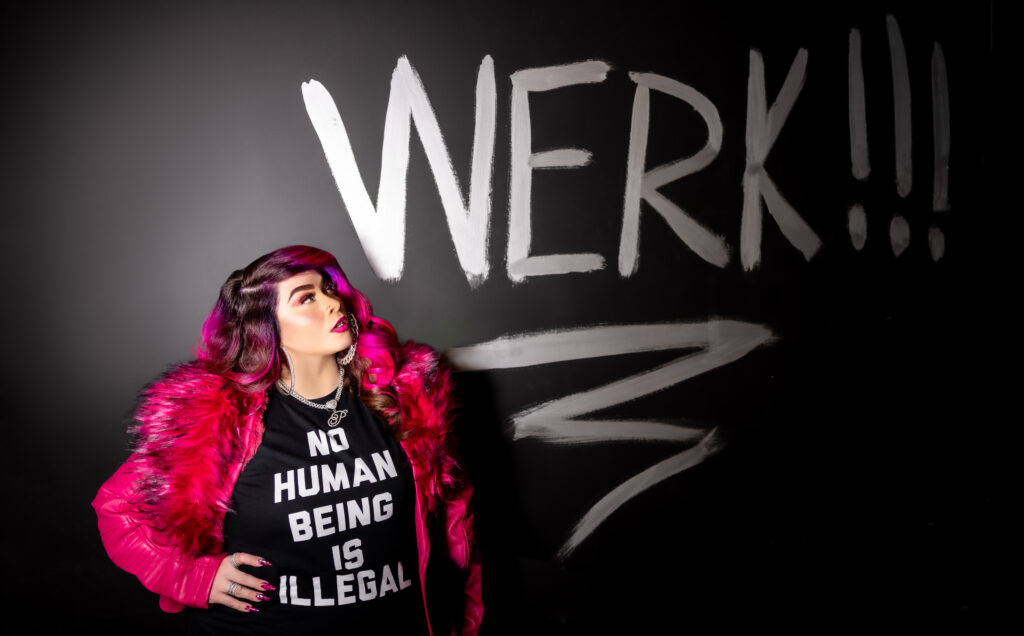
BROTH3R: After seeing people around the world interact with Hip Hop, what do you think was the overall impact?
Pinqy: More than anything, it made me realize just how global Hip Hop really is. The same way Hip Hop gave my teenage self a place to find my identity, develop my voice, question the world around me, and tell my story, it is still doing that for people all over the world.
I’ve watched people find themselves within Hip Hop while expressing it through their own languages, traditional sounds and instruments, histories, and lived experiences. They’re speaking about the issues affecting their communities, preserving their stories, and using the culture to imagine something new. That has always been the legacy of Hip Hop.
Hip Hop is by the people and for the people, and it has been since its inception. It was created by young Black and Brown people who used what they had to make something powerful enough to change the world. And now, everywhere I go, I get to witness people continuing that legacy in ways that reflect who they are.
There’s something incredibly powerful about realizing that this thing that helped a teenage girl in Chicago find her voice is helping somebody thousands of miles away find theirs, too. Different language, different country, different circumstances, but that same need to say: this is who I am, this is what I’m experiencing, and my story deserves to be heard.
BROTH3R: Hip Hop has been global for decades now. From what you’ve personally witnessed, how do you think Hip Hop transcends?
Pinqy: I think Hip Hop transcends because it’s deeply personal, but inherently communal. It gives us the tools to tell our individual stories, but the culture was never meant to exist in isolation. You bring your story, your voice, your experiences, and your perspective, and I bring mine. Somewhere in the middle, we find connection.
We don’t have to speak the same language, come from the same place, or have the same lived experiences to bob our heads to the same beat. To recognize something human in each other. Hip Hop lets us be completely ourselves and still move in rhythm together.
BROTH3R: Tell me about “Ave Maria.” Why was this the record you wanted people to hear from Pinqy Ring right now?
Pinqy: After four years of not releasing music, I wanted to come back with something that felt quintessentially me. “Ave Maria” is bars and brujería: revolutionary rhymes, braggadocious bars, Spanglish wordplay, and ancestral reverence.
I didn’t want my first record back to be about chasing a sound or proving I could keep up with what changed while I was away. I wanted to remind people who the fuck Pinqy Ring is. It’s rooted, revolutionary, spiritual, Puerto Rican, and unapologetically Hip Hop. If you hadn’t heard from me in four years, “Ave Maria” was me reintroducing myself without compromising a single part of who I am.
BBROTH3R: Who are your biggest inspirations, not just musically, but in the way you move through the world?
Pinqy:Musically, people like Big Pun and Lauryn Hill were huge for me. Pun showed me what it looked like to be Puerto Rican and absolutely ridiculous with the pen, and Lauryn showed me how lyricism, spirituality, vulnerability, and conviction could all exist in the same artist.
But my biggest inspirations aren’t all famous people. I’m inspired by people who have always had to imagine beyond what the world handed them: women, Black and queer folks, Puerto Rican revolutionaries, artists, organizers, and the youth of Chicago. Really, I’m inspired by people who tell the truth, create something out of nothing, and leave behind evidence that they were here and made the world a little different because of it.
BROTH3R: Locally, who were the people in Chicago that you looked up to? Who inspired you to organize around Hip Hop?
Pinqy: Growing up, I definitely looked up to Chicago artists like Shawnna, Do or Die, Lupe Fiasco, Twista, and Crucial Conflict. Seeing artists from my city build careers and contribute their own distinct sounds to Hip Hop made an impact on me.
But organizing around Hip Hop is a little different. Honestly, a lot of that journey has been pretty independent. It was hard then, and it’s still hard now, to build something sustainable around Hip Hop in Chicago because of the way our industry and infrastructure are set up. A lot of us are doing incredible work while also having to build the structures that allow that work to exist.
So when I think about what has kept me going, I think just as much about my comrades: the artists, educators, organizers, and friends I’ve built alongside. People sharing resources, putting each other on, creating spaces, showing up for each other’s work, and figuring it out together.
I had people I looked up to, absolutely. But when it came to organizing, there wasn’t necessarily a blueprint. A lot of us became the people and built the spaces we needed when we were coming up.
RAPID FIRE
B: Music or media?
P: Music. No hesitation.
B: What song are you playing way too much right now?
P: Hilariously enough, it’s a TikTok sound/song called “Every Single Cell.” I’m learning EFT tapping right now, so the intersection of positive affirmations, repetition, and music has me in a chokehold. I’ve also been playing Rapsody’s entire new album “God Gotta Afro & Gold Hoops”. I got to perform alongside her at GoodWaves last month, and seeing her live made me dive even deeper into the project.
B: It’s your last meal in Chicago before a month-long ambassador trip. Where are you eating?
P: Papa’s Cache in Humboldt Park, without a doubt. I’m getting a steak jibarito with arroz con gandules and jugo de parcha (passion fruit juice). A jibarito is basically a sandwich where crispy fried plantains replace the bread, usually loaded with meat, cheese, lettuce, tomato, and garlic. And fun fact: jibaritos are Chicago-Rican! They were created right here in Chicago by our Puerto Rican community, so it feels like the perfect last meal before leaving home.
B: What’s something about Chicago that you have to be from Chicago to truly understand?
P: We only eat deep dish when our out-of-town friends are here! Our pizza is a greasy-ass tavern-style thin crust with sausage, green peppers, and onions, cut into squares. And if it don’t come with a free RC, it’s not real! Also, Chicago has one of the most brilliant and vibrant Hip Hop and music scenes in the world. The people who know, KNOW. There is so much talent, innovation, history, and culture here that the rest of the world doesn’t always get to see.
B: What’s the reason you get up in the morning?
P: Legacy. And I don’t mean legacy as in people knowing my name. I mean knowing that because I was here, somebody felt more possible. Somebody told a story they thought didn’t matter. A young person saw another option for themselves. A woman or girl in Hip Hop took up a little more space. Somebody felt heard. I want to leave people, places, and this culture better than I found them.
B: Finally, shameless plug: What’s next for Pinqy Ring?
P: A LOT. I just released “Ave Maria,” so definitely go run that up everywhere you listen to music. I’m continuing my work as a Hip Hop healing artist with Healing Arts Chicago, where I’m exploring what becomes possible at the intersection of Hip Hop, storytelling, creative wellness, and public health.
And, of course, I’m still an MC. There is always more music coming. I’m also at a point where the vision is getting bigger than what I can carry by myself, so shameless plug within the shameless plug: I’m looking for a team, y’all! HELP! Management, booking, PR, people who understand the vision and can help me build what’s next. If you’re reading this and you’re like, “Pinqy needs me,” YOU MIGHT BE RIGHT. Pull up on me baby!
Everything I’m doing might look like different lanes from the outside, but to me, it’s all connected. It’s all Hip Hop. It’s alignment. It’s purpose. It’s destined. And I’m done waiting for “next.” I’m not next. I’m NOW.